
Adam Spigel | August 23, 2025
Eliminating Upstream Noise, Unlocking Digital’s True Potential
Introduction
In digital audio, the quietest components often make the loudest statements. After years of experimenting with linear power supplies, conditioners, fiber isolation, and server optimizations, I thought I had tamed most of the gremlins in my chain. Then came the Farad SuperATX—a purpose-built linear ATX supply that doesn’t just clean up the edges but redefines the foundation.
This review chronicles my journey from powering my server with a Dell SMPS brick and HDPLEX, through missteps with the Super6, and finally to the transformative impact of the SuperATX. What follows is a detailed, track-informed evaluation of what upstream power truly means for digital playback.
Build and Design
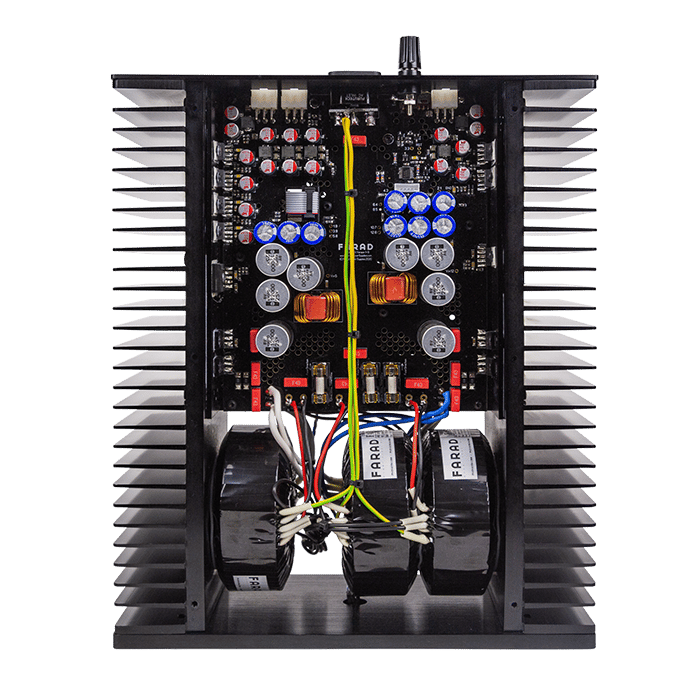
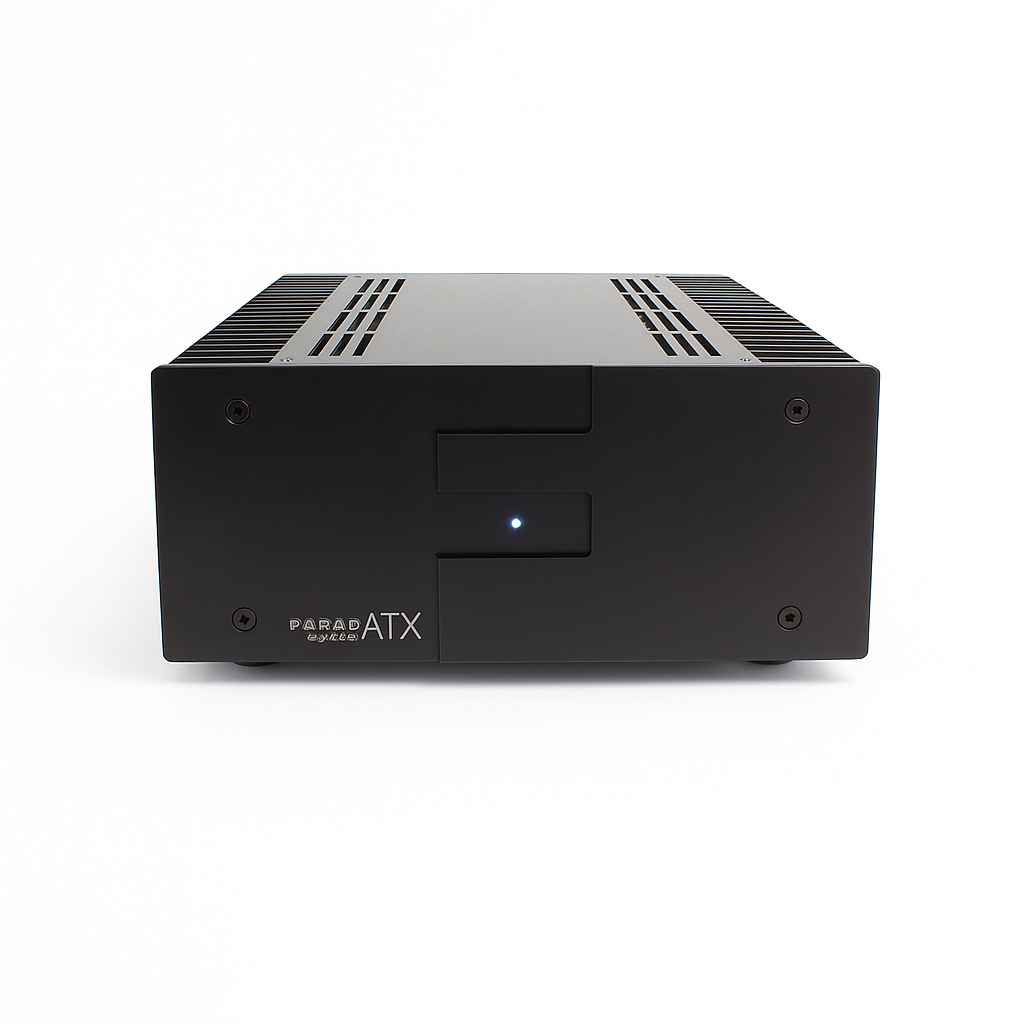
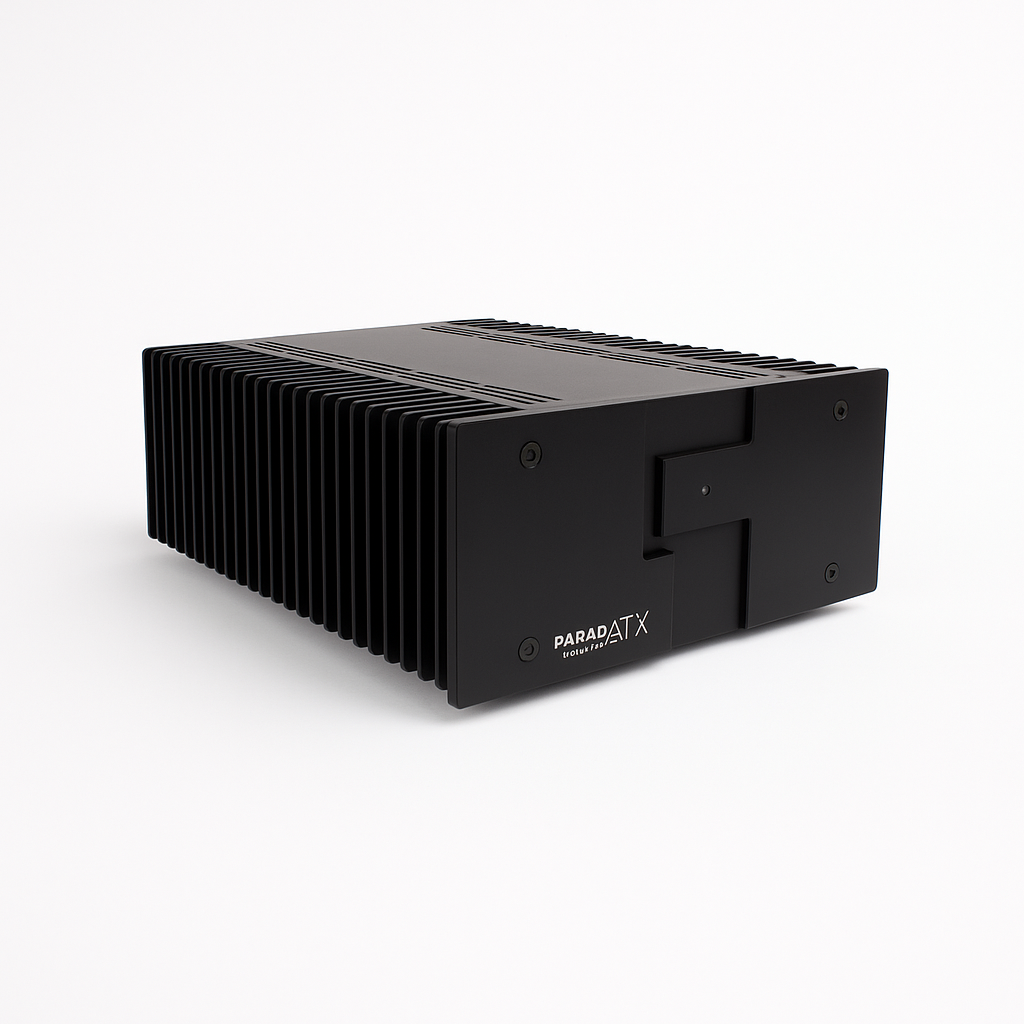
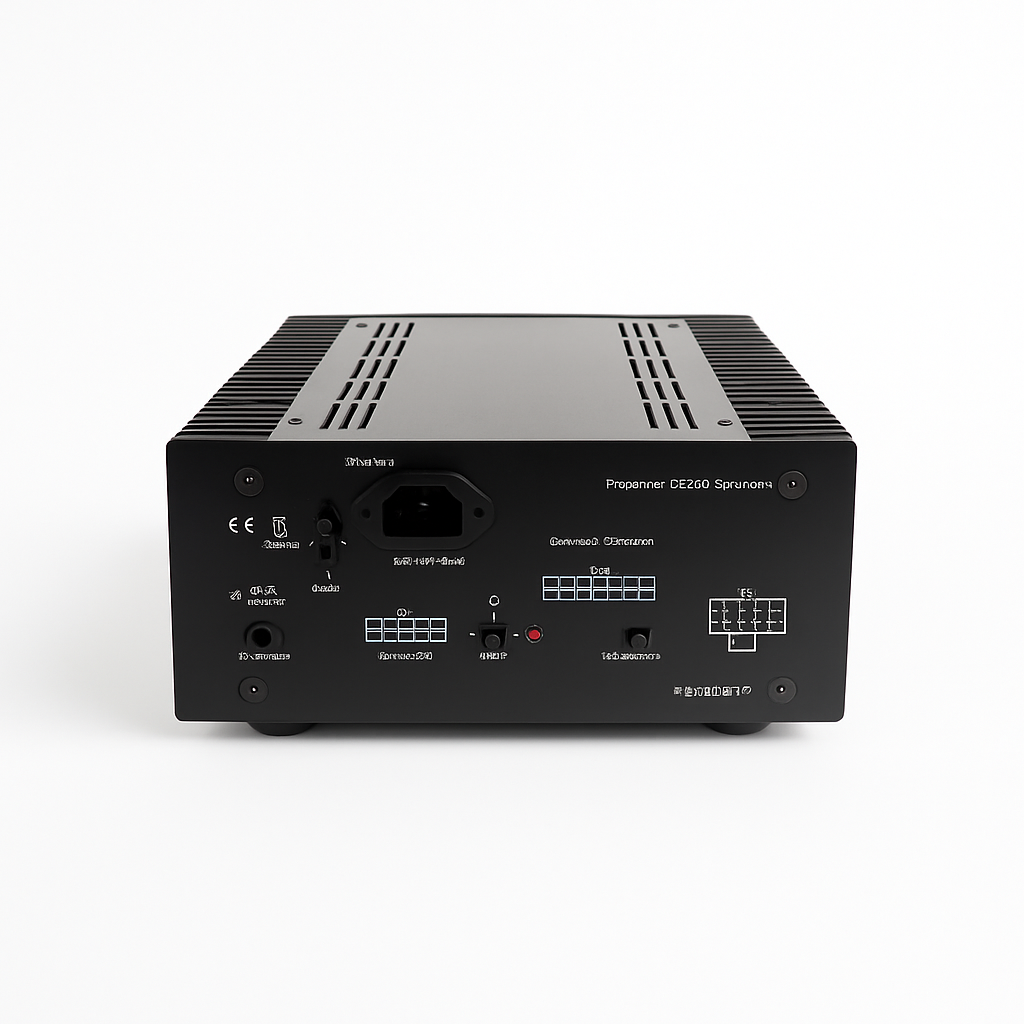
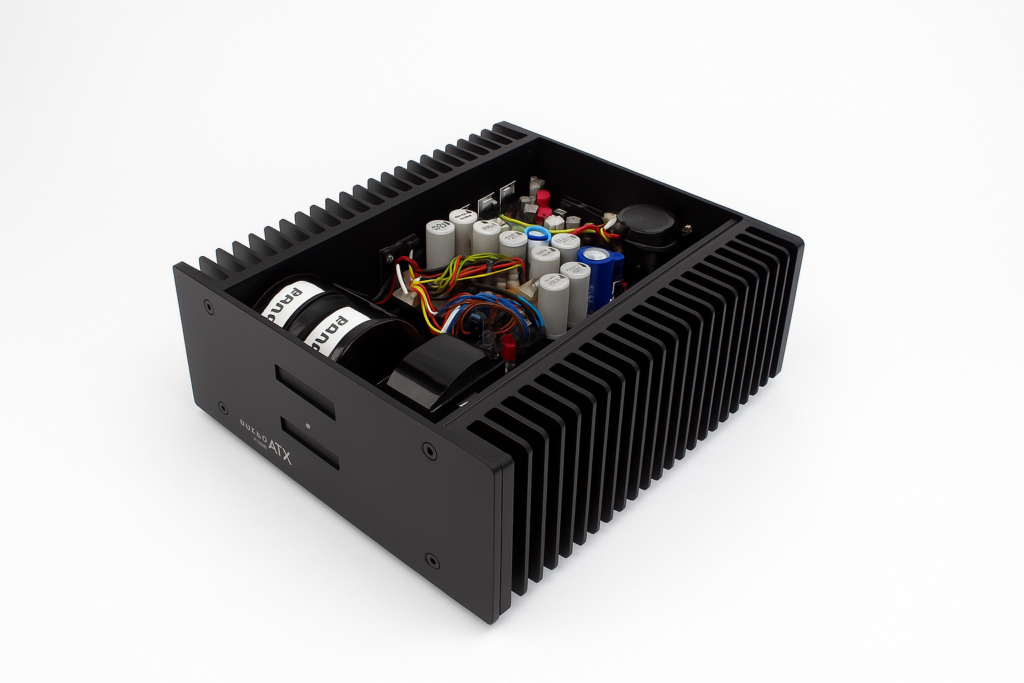
The Farad SuperATX exudes refinement. Its thick, anodized black aluminum housing is compact yet substantial—far from a full-width rack unit, but built with the solidity and attention to detail that inspire confidence. Compared to my JCAT Optimo Duo, the Farad feels in another league. Even after three days of continuous operation, it runs only slightly warm, a testament to engineering efficiency.
Most importantly, it delivers multiple independent, low-noise rails, ensuring CPU, SSD, and motherboard each receive clean, isolated power. This separation prevents cross-contamination—the very design philosophy found in high-end DACs that split digital and analog rails to preserve purity.
The Problem with SMPS Power
Before diving into listening notes, it’s critical to understand what the Dell SMPS brick was doing to my system.
What I measured and heard was classic switch-mode pollution:
-
Differential Mode Noise (50 kHz–5 MHz): modulates clocks, adds jitter.
-
Common Mode Noise (hundreds of MHz): sneaks along Ethernet/USB grounds, bypasses isolation, infects DAC clocks.
-
Conducted EMI: backfeeds into the AC line, contaminating routers, switches, even conditioners.
-
Radiated EMI: pollutes the chassis environment, smearing microdetail and collapsing staging.
Translated to listening: loss of low-level nuance, digital glare, weakened dimensionality, and a flattened stage. In short, music stripped of magic.
Pre-Break-In Listening Impressions
System Context
-
Server PSU: Farad SuperATX (replacing Dell SMPS + HDPLEX)
-
Card PSU: JCAT Optimo Duo, AudioQuest Dragon Source cable
-
Network: SOtM switch on Farad Super6; router on Super3; modem on Super10
-
DAC: PS Audio DirectStream Mk2
-
Cables: Shunyata Omega-X AES, AudioQuest Dragon 48 HDMI, Pink Faun AES/EBU
First Listen
The effect was immediate and dramatic. The noise “hash” was gone. The entire presentation bloomed with energy and vitality. Music sounded not only clearer but more alive.
Snare hits shimmered like live jazz, not smeared into digital mush. Cymbal decays extended naturally into blackness. Subtle phrasing in vocals—once buried—emerged with startling realism.
Fidelizer Optimization
Running Fidelizer on my server took the SuperATX even further. The already black background became inkier still. Micro-detail surfaced effortlessly: the subtle squeak of a violin bow stopping, the woody resonance of a bass string pluck, the breath between vocal lines.
Track Notes
-
Teddy Swims – “Lose Control (Live at the Ryman)”
Monumental scale. Swims’ voice projected holographically into the room. The Ryman’s acoustic expanse unfolded with visceral energy. -
Radiohead – “Decks Dark” (A Moon Shaped Pool)
Bass impact and articulation were seismic. Every synth layer snapped into place with definition that forced me to stop and replay multiple times. -
Norah Jones – “Wild Horses” (Tim Ries Project)
Sublime. The harp’s pluck had tactile attack, horns smoldered with sultry tone, and Jones’ vocals soared, pure and unforced. -
Ray Brown Trio – Soular Energy
Ray’s bass plucks were startlingly real, the piano tone finally true to life. A performance that now felt much closer to vinyl than digital. -
Herbie Hancock – “Watermelon Man”
Previously muddy; now cleaned of its veil. Percussive ticks, once buried, emerged with startling presence. -
Tool – “Fear Inoculum”
The drum hits were cavernous, the sense of depth jaw-dropping. My room felt transformed into a live venue.
Every track compelled me to keep playing another. Fatigue never set in. The SuperATX delivered vitality without edge—live energy without artificial sharpness.
Post-Break-In Observations
With time, the presentation relaxed while deepening. The stage widened and layered with more precision. Textures grew richer yet more natural. Most telling: during recording comparisons, I repeatedly forgot to hit “stop” because I was so engrossed in the music.
The isolated rails proved essential. By preventing CPU noise from contaminating the SSD or motherboard, the “noise soup” that once infected my bus and clock paths vanished. The result was coherence and timing of a caliber usually reserved for ultra-high-end servers.
Comparisons
PS Audio AirLens
Paired with the DirectStream Mk2 via AudioQuest Dragon 48 HDMI, the AirLens impressed with resolution and tonal fullness. Yet, compared against my SuperATX-powered server, it lacked dynamic range, openness, and ultimate blackness. The Farad simply operated on another plane.
AudioQuest vs Shunyata Power Cables
-
Dragon Source: razor focus, extended highs, transient bite.
-
Alpha-X NR: grander scale, organic flow, warmth.
-
Dragon HC: startling dynamics, holographic separation, bass authority.
-
Hurricane HC: focus and weight, but Alpha-X more ease and liquidity.
The SuperATX’s transparency made cable character differences abundantly clear. Importantly, it proved hungry for top-tier current delivery—feeding it with Dragon HC or comparable NR cables elevated its performance further.
System Synergy & Upstream Lessons
One key takeaway: everything upstream matters.
Even power supplies for router and modem influenced final sound, especially when coupled with quality cords (e.g., Tornado HC). Dedicated circuits help, but common ground contamination remains real. The SuperATX, by removing an SMPS from my chain, not only purified my server but lowered overall system noise.
Conclusion
The Farad SuperATX is not a mere upgrade—it is a watershed moment for digital playback. By eliminating upstream noise at the heart of the server, it transforms every downstream component. The result: deeper immersion, greater realism, and music that glows with life.
This is why audiophiles chase the dream: to sit in the dark, hours past midnight, jaw dropped, unable to turn the music off. That’s exactly where the SuperATX left me.
Verdict:
Farad has delivered a masterpiece. The SuperATX belongs at the center of any serious digital system. Highly recommended.