
This is a major shift—and one that might even work against your system’s balance, as I’ll explain. That’s the paradox of progress in high-end audio: the closer we get to realism, the more we reveal. And sometimes, what we reveal isn’t what we want to hear.
First Impressions: Naturalism Redefined
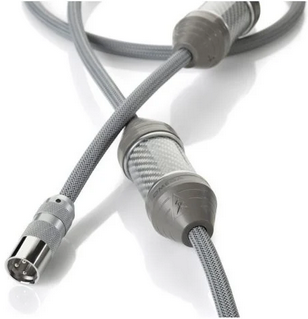
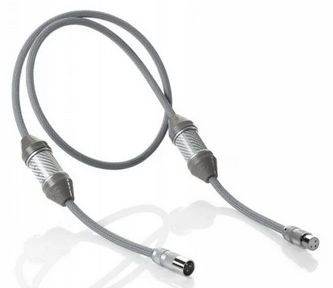
The new Omega-X represents a significant step forward from the older Omega model it replaces. The most immediate improvement? Tonal naturalness. Voices feel more lifelike—less etched, more dimensional. Gone is the slight hi-fi sheen that could exaggerate sibilance. The presentation now leans more organic, more relaxed, yet without losing clarity or impact.
The background is notably blacker. Subtle vocal and instrumental cues—singers’ breaths, lip movements, the nuanced scrape of a bow across strings—emerge with startling realism. Guitar strums come across with a natural sweetness, while violins now bloom with harmonic richness and believable resonance.
Instrumental timbre has improved as well. With the Omega-X, I find it easier to distinguish closely voiced instruments. This ability to resolve subtle differences contributes to a deeper sense of musical truth. And then there are moments—like the end of one track—where the realism was so vivid, it genuinely startled me.
Horns? To die for. Big, rich, “phat”—just like the real thing. The theme is clear: Omega-X brings you palpably closer to the source. For me, in 2025, it might be the endgame AES/EBU cable. I can honestly see passing this one down as an audiophile heirloom.
The Paradox: When Better Can Sound Worse
But let’s talk about the flip side—because this cable, as revelatory as it is, also revealed some unpleasant truths in my system.
We all do it: chasing upgrades to fix a sound we don’t like. But how often do we misdiagnose the problem? Years ago, I blamed my amp for bass bloat. Turns out the real culprit was a Linksys router adding noise to my digital front end.
I’ve even nearly sold gear I loved—like my Airtight preamp—because I was tired and misjudged the sound. A late-night swap from NOS Brimar tubes to Telefunkens changed everything. It reminded me that mood, fatigue, and even allergies can affect how we hear. And that we should never dismiss the weak link—especially when it could be upstream.
Post-Omega-X: Unmasking System Flaws
With the Omega-X installed, I began to notice two things:
- Slight stridency and fatigue on some well-recorded tracks while streaming
- A subtle reduction in bass weight during flat file playback
Initially, I wondered if the Omega-X was the cause. But stepping back, I realized it was likely the absence of masking. The Omega-X, by lowering the noise floor and increasing realism, was revealing flaws hidden further up the chain. That’s not a fault—it’s a feature.
Diagnostic Path Forward: My Planned Upgrades
Here’s how I plan to isolate and address the upstream noise sources:
- Farad SuperATX – Replacing the noisy 19V Dell SMPS that currently feeds my HDPLEX DC-DC PSU. Initial testing shows less edginess and improved bass weight when streaming.
- JCAT Reference SATA Cable – Aiming for lower EMI and tighter transients inside the server.
- JCAT OPTIMO nano PSU – To power my Samsung SSD cleanly, eliminating ripple from the SMPS.
- Alternate SSD power path – Powering the SSD from a clean rail off the SuperATX while keeping the JCAT Optimo Duo on the Pink Faun SPDIF/AES/EBU bridge and Ethernet card.
- Other combinations – To be explored as I further refine the system.
Note: I suspect the SSD’s direct connection to the Dell brick is affecting flat file playback. This is the kind of noise that hides in plain sight—until a transparent component like Omega-X pulls it into the light.
The Bigger Lesson: Transparency Is a Double-Edged Sword
Upgrading to something more revealing—like Omega-X—can force you to confront systemic issues you didn’t realize were there. It’s like putting race tires on a car running low-octane gas: the full potential can’t be realized until everything is up to spec.
This might be why we audiophiles are perpetually tweaking, swapping, chasing. But if done thoughtfully, that process can bring us closer to truth—not just in sound, but in understanding our system holistically.
Final Thoughts (and What’s Next)
The Omega-X and Sigma-X Ethernet cables are still breaking in, but early signs are promising. I had the chance to hear this same combo at a friend’s system, and that experience alone convinced me to upgrade.
A full review of the Sigma-X will follow soon. In the meantime, I’m continuing upstream refinement and testing hypotheses about digital noise, server design, and power delivery.
Until next time—keep listening and keep questioning.
Ready to hear what your system is really capable of?
Noise doesn’t just cloud the signal—it clouds our perception of what our gear can truly deliver. If you’ve invested in top-flight DACs, servers, and amps, don’t leave upstream digital as an afterthought.
Schedule an up-stream digital make over today.
- Use our contact form and you will hear from me shortly
Our Approach to Digital Purity:
Upstream Unmasked: Exploring the Last Frontier of Digital System Tuning
 Acknowledgment
Special thanks to Michael Farnsworth of Farnsworth Audio for his continued support and guidance throughout this evaluation. His deep knowledge and curated product offerings—including Farad, Shunyata Research, and many other exceptional brands—made this review possible.
If you’re looking to elevate your system with expert advice and trusted service, I highly recommend reaching out:
Farnsworth Audio
 +1 (801) 580-8904
 Mike@farnsworthaudio.com
 Visit Farnsworth Audio (insert actual link if different)
Let’s Keep the Conversation Going
If you’ve had similar experiences—or if you have a tip or tweak you think I should try—please reach out. I’d love to hear your perspective. You can message me:
- Via the contact form on this site
- On X (formerly Twitter)
- On Facebook