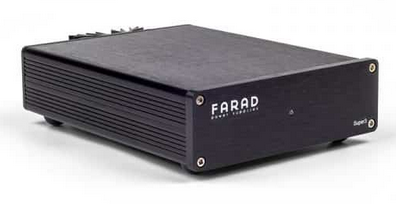
The night before last, I set out with modest intentions—just to upgrade the power cable from my wall to the conditioner before calling it a night. But as any audiophile knows, curiosity rarely stops at the first click of an IEC connector. One thing led to another, and I found myself deep into an impromptu evaluation session—this time focused on the power supply of my Araknis router, specifically the Farad Super3 that feeds it.
Now, mind you, this was all happening while I was making dual-DSD recordings for testing, pulling files directly from my server’s SSD. In theory, the router shouldn’t even factor in—after all, no streaming was involved. But here’s the twist: while waiting for my Farad Super6 to arrive for my clean-side switch (where my fiber optic isolation normally terminates), I had temporarily connected my Shunyata Omega-X Ethernet cable directly from the router to the media server.
And that, dear reader, is where things got interesting.
The Setup — and the Surprising Variable
I tested three power cables on the Farad Super3 powering the router:
- Van den Hul The Mainsstream Hybrid
- AudioQuest Tornado HC
- Shunyata Theta NR
Given that I wasn’t streaming, one would assume cable swaps upstream of the server wouldn’t matter. But with fiber temporarily out of the chain, the Omega-X cable became a conduit not just for data—but for noise.
And I heard it.
Listening Impressions — When the Bits Don’t Lie
Here’s what I observed in the recorded material, despite pulling files from internal storage:
- AudioQuest Tornado HC: Surprisingly resolving in the upper registers—guitar strings, in particular, shimmered with a hyper-realistic edge. But there was a sense that everything was slightly elevated in pitch, and vocals, while clear, lost some of their intimacy. Bass, though defined, lacked the physical depth I crave. There was a “HiFi sheen”—impressive, but slightly unnatural.
- Van den Hul Mainsstream: Delivered a presentation that, while undeniable detailed, carried a certain forwardness in the upper midrange—an almost etched quality that, over time, boarders on fatigue.
- Shunyata Theta NR: This was the standout. Vocals came alive with a lifelike presence—intimate, natural, and anchored. Bass lines had a foundational solidity, a physical undercurrent that grounded the entire soundstage. Violins lost that synthetic edge, becoming tactile, embodied. Overall, the Theta simply delivered the truest tone and most organic flow.
These weren’t minor variations. They were recordable, repeatable, and—yes—audible.
Wait, But Why? Enter the Noise Gremlins.
At first, this discovery felt implausible. But when I took stock of the system configuration, it made sense. No fiber isolation meant the Ethernet cable could transmit not just packets, but high-frequency EMI and RFI from upstream gear straight into my server.
ChatGPT’s take on this was quite instructive:
“Even with fiber isolation, network-related electrical noise and timing issues can still influence your system in subtle ways—especially if you’re using streaming services, Ethernet-connected streamers, or highly resolving DACs.”
My DAC is very resolving. My system is very revealing. And without fiber isolation, the router became a highway for timing errors and phase noise, directly impacting the integrity of digital playback—even when reading from SSD.
The Return of Fiber — Do the Changes Persist?
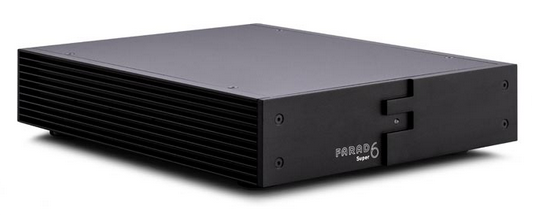
A few days later, with the SoTM switch and Farad Super6 back in place and fiber restored, Omega-X ethernet cable between the switch and server, Sigma-X ethernet cable between modem and router. I repeated the cable swap tests. The changes were still there—but less pronounced.
Swapping from the Shunyata back to the Van den Hul, I still noted:
- A slight reduction in vocal intimacy
- Less harmonic bloom on piano
- A touch more grain in string textures
But overall, fiber had done its job—blocking much of the upstream noise. Still, the fact that I could still hear changes in recorded material with fiber in place tells me that noise can ride back through shared ground paths or radiate indirectly, even with linear supplies and optical isolation.
⚠️ A Note on Grounding and Shared AC Lines
One variable that likely contributed: my system was temporarily relocated, with both “clean” and “dirty” sides sharing the same AC circuit. Even with dedicated power supplies, shared ground potential can allow noise to re-enter through common-mode leakage—especially in systems without full isolation transformers or ground lifts.
Even well-shielded cables and low-noise PSUs can radiate low-level interference, which a high-end DAC or Ultra OCXO-clocked AES card might pick up. Galvanic isolation helps—but it is not a panacea.
Update on 8/1/2025:
I think ChatGPT gave me a good explanation on why things like switched mode power supplies (SMPS) and other noisy networking devices can affect things downstream even when separated by fiber:
The Dirty Truth Behind a Switch Mode Power Supply (SMPS)
Here’s what it was putting out:
• Differential Mode Noise (50kHz–5MHz): Travels along DC rails, modulates clocks, adds jitter.
• Common Mode Noise (into hundreds of MHz): Rides Ethernet/USB grounds, bypasses isolation, enters DACs directly.
• Conducted EMI: Feeds noise back into the AC line, infects other components like switches and routers.
• Radiated EMI: Pollutes the airspace around digital and analog circuits — kills microdetail and staging.
In Audio Systems, This Means:
- Loss of low-level detail
- Increased digital glare or grain
- Less black background
- Weakened soundstage dimensionality
- Degrade clock performance if connected to digital gear via Ethernet
The result?
Grain. Glare. Flat imaging. No magic.
The fix?
I replaced the SMPS power supply with a proper low-noise PSU (in my case replacing the Dell brick with a Farad SuperATX).
- Cleaner highs
- Better timing and transients
- Deeper, more articulate bass
- overall improvement in realism and involvement
The big difference?
Cleaner highs. Deeper bass. Blacker backgrounds. More music.
Don’t underestimate upstream noise. It’s real — and it’s robbing your system.
Conclusion: Everything Matters
The takeaway from this accidental deep dive is clear: everything matters—especially when fiber isn’t in the chain. But even with fiber, power cable swaps upstream of your streamer or router can make a difference—just more subtle.
When we talk about jitter, phase noise, and EMI, these aren’t abstract concepts. They’re real, measurable, and audible—especially in systems where the digital-to-analog transition is the final bottleneck.
Just as with room acoustics, it’s easy to blame the DAC, or the preamp, or even the mastering. But sometimes, the flaw lies upstream—in a router, a cable, or a power supply we’ve long dismissed as irrelevant.
I’ve now proven it to myself with DSD recordings. If you’re serious about extracting the last ounce of realism from your music—don’t stop at the server. Follow the noise—upstream.
Ready to hear what your system is really capable of?
Noise doesn’t just cloud the signal—it clouds our perception of what our gear can truly deliver. If you’ve invested in top-flight DACs, servers, and amps, don’t leave upstream digital as an afterthought.
Schedule an up-stream digital make over today.
- Use our contact form and you will hear from me shortly
Our Approach to Digital Purity:
Upstream Unmasked: Exploring the Last Frontier of Digital System Tuning
 Acknowledgment
Special thanks to Michael Farnsworth of Farnsworth Audio for his continued support and guidance throughout this evaluation. His deep knowledge and curated product offerings—including Farad, Shunyata Research, and many other exceptional brands—made this review possible.
If you’re looking to elevate your system with expert advice and trusted service, I highly recommend reaching out:
Farnsworth Audio
 +1 (801) 580-8904
 Mike@farnsworthaudio.com
 Visit Farnsworth Audio (insert actual link if different)
Let’s Keep the Conversation Going
- Via the contact form on this site
- On X (formerly Twitter)
- On Facebook