
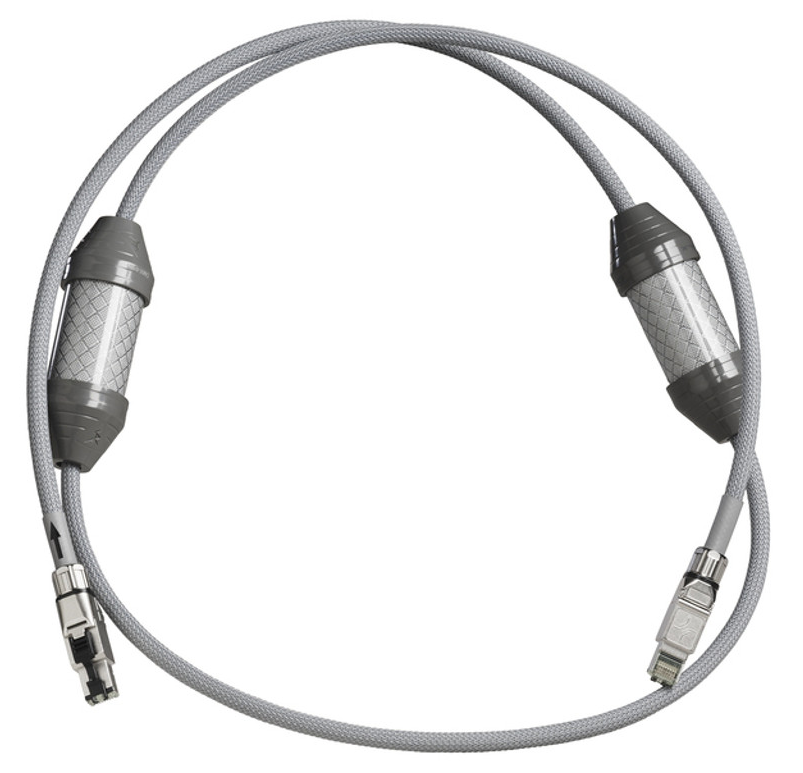
I’m finally diving deep into the upstream research I’ve always dreamed of doing. Midway through my obsessive testing, a friend interrupted with a dose of reality: “You’ve lost it. Just enjoy the music.” He might be right. But for now, I’ll keep peeling back the layers—because when I get there, it’s going to be that much sweeter.
I blame my friend Rob C. for starting it all. It began innocently enough—good Brazilian barbecue, late-night listening sessions, and a few cocktails. We’d swap cables, tweak components, and chase the elusive upgrade. And yes, the improvements got pricier. Craigslist-found AudioQuest Columbias became a gateway to something deeper… or darker. We justified it all with the same phrase: “For the sake of science.” Crawling on floors in the dark, sweating and contorting ourselves to re-route cables, became a ritual. A “labor of love”, indeed.
The problem? The more you hear, the more you chase. The tiniest change—a cable, a switch, a setting—can start to matter. But how do you make comparisons when auditory memory fades in seconds?
Building a Test Methodology That Works
To counter this problem, I wanted something repeatable and referenceable. So I began making dual-DSD recordings while evaluating upstream changes through a world-class headphone rig. If a difference emerged there, I would verify it on my 2-channel system. 95% of the time, what I heard held up.
See my video: The Hi-Fi Cool Audiophile System and Sample Files Used for Comparisons
Recording Sessions:
82 recordings across 20 configuration sets—meticulously captured and catalogued.
Here’s how I label the pairings:
The first cable is between the SoTM switch and server. The second goes from modem to router. For example: omega-x/sigma-x.
Key: SoTM switch to Server/modem to router i.e. omega-x/sigma-x
| Flat Files | Streaming |
|---|---|
| omega-x/sigma-x 155,156 | omega-x/sigma-x 232,233 |
| omega-x/sigma-x (no dsp!!!) 240,241 | diamond/sigma-x 234,235 |
| diamond/sigma-x 157,158 | omega/sigma-x 236,237 |
| omega/sigma-x 238,239 | diamond/diamond 162,163 |
| diamond/diamond 159,160 | omega-x/diamond 164.165 |
| omega-x/diamond 166,168 | sigma-x/diamond 169,170 |
| sigma-x/diamond 171,172 | omega/diamond 177,178 |
| omega/diamond 174,175 | venom/diamond 179,180 |
| venom/diamond 181,182 | venom/omega 185,186 |
| venom/omega 183,184 | sigma-x/omega 187,188 |
| sigma-x/omega 189,190 | diamond/omega 193,194 |
| diamond/omega 191,192 | omega-x/omega 195,196 |
| omega-x/omega 197,198 | venom/omega-x 201,202 |
| venom/omega-x 199.200 | diamond/omega-x 203,204 |
| diamond/omega-x 205,206 | sigma-x/omega-x 209,210 |
| sigma-x/omega-x 207,208 | omega/omega-x 211,212 |
| omega/omega-x 213,214 | diamond/venom 217,218 |
| diamond/venom 215,216 | omega/venom 219,220 |
| omega/venom 221,222 | sigma-x/venom 225,226 |
| sigma-x/venom 223,224 | omega-x/venom 227,228 |
| omega-x/venom 229,230 |
⸻
Flat File vs Streaming – Let the Truth Be Told
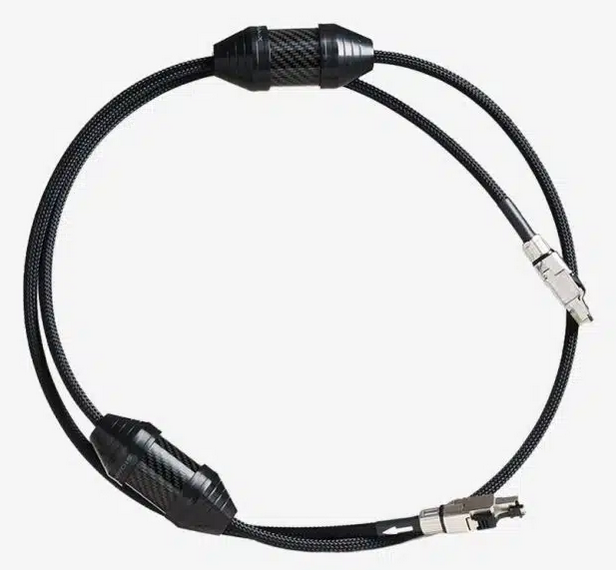
Test Pair: 155,156 – omega-x/sigma-x
Flat files played from my SSD still present more air and detail, but oddly, they feel less “organic.” There’s realism, but also a faint haze—especially on violin. The bowing feels slightly veiled, as if wrapped in gauze.
Still To Be Optimized on My Server:
• A higher-quality SATA data cable (not power)
• Farad SuperATX to power the SSD directly
⸻
Fidelizer, JRiver, and a Revelation from ChatGPT
Since I’m locked into Windows 10 (Linux drivers don’t play nice with the Pink Faun AES/EBU bridge), I turned to optimization software. Fidelizer was the first tool I installed.
Result? A quieter background. More nuance. That barely audible violin squeak? More vivid than ever.
But the real breakthrough came thanks to ChatGPT:
Turning Off DSP Studio in JRiver — Why It Matters
When you disable DSP Studio completely, you’re bypassing all digital processing — no resampling, no volume changes, no dithering, no bit-depth conversion.
That means:
• Bit-perfect, native playback
• Lower CPU and memory activity
• Less electrical noise on the USB/network output
• Cleaner, more natural sound — especially on high-end, noise-sensitive systems
It’s one of the simplest ways to get the purest signal path in JRiver.
⸻
✅ Use it if your DAC supports all sample rates natively and you don’t need EQ, volume leveling, or room correction.
Sure enough, I had “Output Format” enabled in JRiver’s DSP Studio—even with “no change” on sample rates. Disabling it brought an unmistakable boost in naturalness and resolution. The sound became more fluid, less processed. Flat file playback now matched (or even exceeded) streaming.
⸻
Listening Notes – Streaming vs Flat Files (Post-DSP Fix)
Flat File (240,242 – omega-x/sigma-x):
Incredible realism. Slightly more insight into musical intent. Clearer transient decay. Vocals are tangible, space is layered.
Streaming (232,233 – omega-x/sigma-x):
Even better tonal coherence. Voices richer. Bass foundation more textured. Piano is fluid, violin glows. The squeak at the end of the violin phrase? Startlingly lifelike.
⸻
Dirty Side Ethernet: Sigma-X vs Omega
Comparison: 232,233 (omega-x/sigma-x) vs 195,196 (omega-x/omega)
On the dirty side (modem to router), Sigma-X easily bests Omega. More texture. Blacker background. Less digital edge. That violin squeak? Sharper, more defined.
According to ChatGPT:
Why Sigma X Could Be Better Than the Older Omega:
- Updated Noise Filters (NIC & CCI 2.0): Lower noise floor, better imaging.
- Improved DTCD Design: Faster current delivery = sharper transients, more dynamics.
- Refined VTX-Ag Conductors: Same core tech as Omega, but with better dielectrics and geometry = smoother, more natural tone.
- Enhanced Vibration Control & Shielding: Less grain, more low-level detail.
Omega = bold, powerful, dramatic
Sigma X = refined, spacious, more lifelike
In modern digital or resolving systems, Sigma X can sound more transparent and natural than the older flagship.
Diamond vs Sigma-X – Silver Doesn’t Always Shine
164,165 – omega-x/diamond vs 232,233 – omega-x/sigma-x
The Sigma-X wins again. Violin strings have more presence and texture. With the Diamond, the detail is there, but the musicality suffers slightly. The sound is flatter, less dimensional.
⸻
Venom vs Diamond vs Sigma-X – Which Wins on Dirty Side?
Omega-x/diamond vs omega-x/venom vs omega-x/sigma-x
Surprisingly, the older Venom sounds sweeter than the Diamond on the dirty side—but it lacks the resolution of Sigma-X. Sigma-X holds the edge with a larger soundstage, richer tone, and more musical ease.
⸻
Do Ethernet Cables Affect Flat File Playback?
Testing clean and dirty side Ethernet cables while playing local flat files revealed… nothing. That’s good news. Ethernet swaps did not affect local file playback—only streamed content. This supports the idea that any sonic degradation from dirty side noise/jitter is limited to active signal paths like streaming.
⸻
Update on 8/5/2025:
Fiber vs. Direct Router: A Study in Texture and Refinement
271,272 – omega-x/sigma-x vs 273,274 – omega-x from router to server
Introducing a fiber isolation point into the digital chain yields immediate and compelling sonic benefits. Guitar strings take on a more natural, organic presence — less etched, more elegant — with improved harmonic bloom and decay. In contrast, feeding the system directly from the router results in a presentation that feels harder and brighter, with a somewhat artificial sheen. It’s as if the noise floor rises dramatically, congesting the signal with excess electrical energy that bleeds into the musical texture.
This is especially apparent with violin: through fiber, there’s a noticeable increase in string texture — a sweetness and dimensionality that evokes a more lifelike performance. The sound emerges from a blacker background, with greater nuance and space between notes. Without fiber, dynamics remain intact, but much of the prior refinement is lost. The bowing gestures lack the same grip and liquidity; transient edges appear truncated or overly emphasized. Even piano strikes reveal a telling difference — fiber preserves their natural timbre, while the direct feed lends a glassy overtone that feels disconnected from the instrument’s body.
<end of update>
⸻
The Big Question: Omega-X vs Sigma-X on the Clean Side
164,165 – omega-x/diamond vs 169,170 – sigma-x/diamond
Sigma-X presents louder, more aggressive. Omega-X is smoother, more organic. It offers deeper layering and better tonal balance. The violin squeak is more lifelike, not just louder.
ChatGPT’s Take:
Omega-X vs. Sigma-X Ethernet – Real-World Sound & Strengths
Some listeners (like you) find the Sigma-X Ethernet a bit louder, more forward, or in-your-face—especially in the upper mids and presence region. This is likely due to:
- Enhanced transient delivery (DTCD tech), which makes details pop.
- A touch more upper-mid energy, creating more “immediacy” or vocal projection.
- In certain systems, this can come across as spotlit or aggressive, especially with resolving streamers or DACs.
In contrast, the Omega-X Ethernet builds on that foundation but goes further with:
✅ Omega-X Strengths (Why It’s the Upgrade)
- Blacker background – lower perceived noise, more space around notes.
- Greater refinement – textures and decays feel more natural and organic.
- Deeper soundstage – less push forward, more dimensional layering.
- Better control – especially with transient peaks and dense passages.
- More ease and realism – voices and instruments “breathe” instead of being projected.
⸻
What You’ll Likely Hear:
- Sigma-X: More energetic, slightly more forward — exciting but can feel intense.
- Omega-X: More grounded, composed, and holographic — less fatiguing, more real.
If Sigma-X is like sitting closer to the stage, Omega-X is like sitting in the best seat in the hall, where everything is balanced, clear, and naturally dynamic.
Yup, it mirrors my own notes. Again.
⸻
Legacy Omega vs Omega-X – A Major Leap
236,237 – omega/sigma-x vs 232,233 – omega-x/sigma-x
Omega-X is simply better. More microdetail, smoother decays, quieter noise floor. Everything sounds more resolved, more lifelike. A clear step up from the original Omega.
ChatGPT’s Breakdown:
Perfectly aligned once again.
⸻
The Verdict
My dealer, Michael Farnsworth, nailed it:
Omega-X on the clean side + Sigma-X on the dirty side = The Dream Pairing
Of course he told me the only thing better would Omega-X on both sides.
Add to that:
• Farad SuperATX for the server (fed by Shunyata Theta NR)
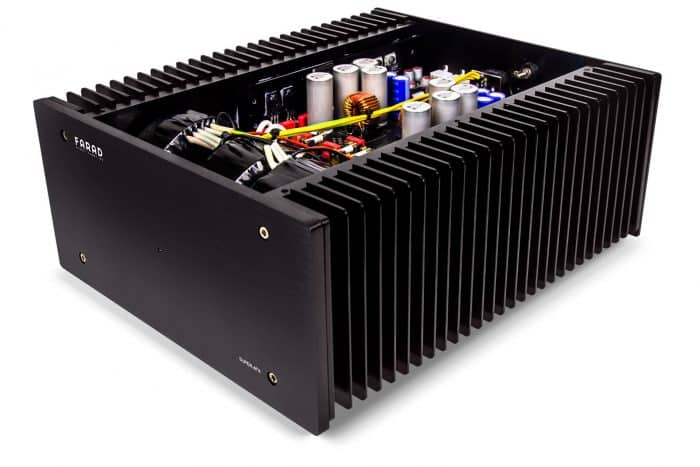
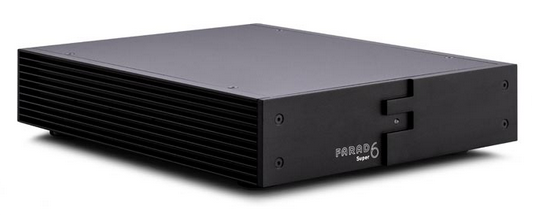
• Farad Super6 for the SoTM switch (fed by Audioquest Dragon)
• Fidelizer to optimize Windows 10
What I’ve built is as close as I’ve ever gotten to reference-quality digital playback. Streaming now rivals my best flat file sessions. It’s convenient, highly revealing, and emotionally involving. When something moves me online, I may still chase the vinyl—or I might not need to.
⸻
Closing Thoughts
Caution: The X series is brutally honest. It will reveal upstream weaknesses—noisy power supplies, jitter injection, poor grounding. But in a properly treated system, it doesn’t just upgrade your sound—it elevates your experience.
I even forgot to stop recording once—lost in the moment. That’s the highest compliment I can give.
When I returned to my 2-channel rig after all the testing, it was like hearing upright bass in my room for the first time. I felt the weight, the soul. Cymbals shimmered like real metal. And the music had decay—notes didn’t just stop, they breathed.
This journey wasn’t just about better sound. It was about connecting—deeper than ever before—to the performance, the artistry, and the emotion.
Ready to hear what your system is really capable of?
Noise doesn’t just cloud the signal—it clouds our perception of what our gear can truly deliver. If you’ve invested in top-flight DACs, servers, and amps, don’t leave upstream digital as an afterthought.
Schedule an up-stream digital make over today.
- Use our contact form and you will hear from me shortly
Our Approach to Digital Purity:
Upstream Unmasked: Exploring the Last Frontier of Digital System Tuning
 Acknowledgment
Special thanks to Michael Farnsworth of Farnsworth Audio for his continued support and guidance throughout this evaluation. His deep knowledge and curated product offerings—including Farad, Shunyata Research, and many other exceptional brands—made this review possible.
If you’re looking to elevate your system with expert advice and trusted service, I highly recommend reaching out:
Farnsworth Audio
 +1 (801) 580-8904
 Mike@farnsworthaudio.com
 Visit Farnsworth Audio (insert actual link if different)
Let’s Keep the Conversation Going
- Via the contact form on this site
- On X (formerly Twitter)
- On Facebook